As we get older, it’s not uncommon to experience tighter joints, slower balance, or longer recovery from minor injuries. Still, staying active is possible and just as important as ever. For those of us living in Venice, Florida, the summer heat can limit how often we head outdoors. That’s where small changes to how we move indoors can make a big difference. Using adaptive fitness techniques helps create safer, more manageable ways to keep moving without overdoing it. When we adjust wisely, we keep building strength, even one step at a time.
Having an active routine becomes more challenging as the weather gets hotter, but age is not a barrier to movement. In fact, finding comfortable ways to stay active indoors brings both energy and peace of mind, especially during summer’s hottest spells. The priority shifts from how much we do to how well we protect our balance, joints, and stamina.
What “Adaptive” Really Means for Senior Fitness
The word “adaptive” doesn’t mean giving up our routines. It means adjusting them in a way that works with the body we have today. That could look like standing a little closer to a wall during balance work or reaching for lighter hand weights instead of the usual ones.
Fitness at this stage is less about pushing limits and more about consistency and safety. There’s value in every movement, even when it’s slower or smaller. Here are a few simple ways to work with what’s available and still make progress:
- Use a firm, sturdy chair for seated balance work or light strength training
- Grip soft resistance bands instead of hard hand weights when wrists feel sore
- Step back from a mirror to make sure posture and position feel right
Being adaptive means our efforts can look different from day to day. One day, it might mean we spend more time on gentle stretching, while on another, we lean into light strength moves. The key is finding satisfaction in what the body can do right now. Small changes may seem minor, but they’re proof that we’re still moving toward better strength and steadiness.
When we let go of aiming for how things used to feel and instead focus on what helps us move today, our workouts become more rewarding and less frustrating.
Making Common Exercises Work for Different Abilities
Basic movement can be powerful when we shape it to match our needs. Not every workout comes from a big setup or equipment. Many helpful movements use just our own body and a safe, quiet space.
- Leg raises can start with one foot lifted while seated, then shift to standing near a wall for support
- Wall push-ups allow control of how deep to bend or how far to step back
- Seated marches bring up heart rate without stress on knees or hips
Balance changes? No problem. We can start close to a counter, then shift slowly away as we get used to the motion. Short sets, longer rests, and steady breathing all help keep movement smooth and safe. There’s no race. It’s more about repeating good movements than trying to do something brand new every week.
It helps to look at typical exercises and tailor them based on how we feel on a given day. Some days, shifting weight from one foot to the other builds confidence. On others, focusing on good posture while sitting is just as valuable. When abilities change from day to day, routines can shift too. The most effective movements are usually the ones we enjoy and can return to without discomfort.
How to Set Up a Safer Space for Adaptive Exercise at Home
Having the right environment matters just as much as the right exercises. It takes just a little effort to set up a space that helps, not hinders.
- Clear paths through the room so nothing trips us while shifting positions
- Use non-slip rugs or remove small mats entirely if they bunch or slide easily
- Keep a chair, countertop, or wall within reach just in case balance shifts unexpectedly
In summer, especially in Venice, Florida, we need to stay mindful of indoor comfort levels. The air gets heavy fast. Early mornings or evenings are better times to move without overheating. A fan or steady AC, a water bottle nearby, and good air in the room can make all the difference. We want to feel alert, not worn out a few minutes in.
Having a distraction-free area can be motivating and boost consistency. When the temperature rises, shutting windows and closing blinds can keep spaces cooler. It can also be helpful to have water within arm’s reach and pause between sets to catch our breath. Soft lighting and calm music add comfort, making exercise a time to look forward to, rather than something we feel we have to get through each day.
When and Why to Work with a Trainer
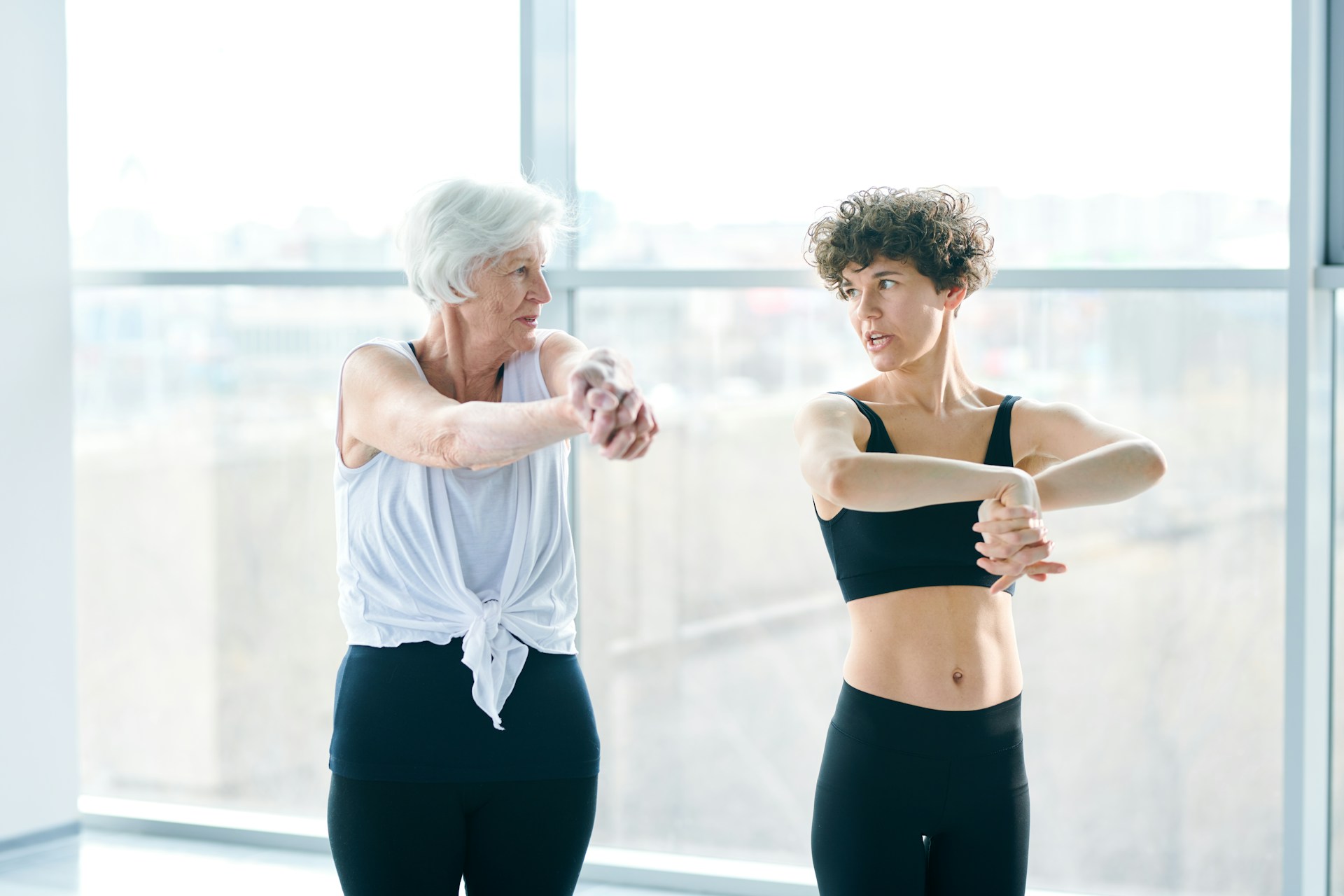
Trying new movement patterns alone isn’t always easy, and sometimes it’s hard to notice what doesn’t feel quite right until pain shows up later. That’s where a second set of eyes becomes helpful.
A good trainer can notice:
- Slight posture changes that might cause aches later
- A step that’s a bit too far from safe or a chair that wobbles slightly
- When the body might need rest instead of more reps
Everyone moves differently. It’s not about fitting a mold but finding a system that supports real progress. As our balance changes or aches pop up that didn’t used to, it helps to have someone nearby who adjusts the plan. Adaptive movement becomes truly valuable when it matches where we are and gently points toward where we want to be.
Working with someone else brings reassurance, especially if health conditions or injuries have changed the way we move. A trainer can offer feedback and tweak exercises before strain happens. When movement feels uncomfortable, it’s easy to skip it. Having another person support our progress and tailor routines means less worry about getting it wrong and more opportunity to focus on steady gains at whatever pace is right for us.
Confident, Comfortable Movement All Summer Long
Every routine we build around safety, comfort, and choice helps us stay active longer. Even on the hottest days, there’s something powerful about knowing we can still move without feeling rushed or overwhelmed.
In Venice, Florida, staying inside might be the smartest move some days. And when we pair a little equipment with smart planning and patience, we create a routine that feels steady instead of stressful. The beauty of adaptive fitness techniques is that they meet us where we already are, then help us take the next small step forward.
Whether we prefer to move in the morning, afternoon, or evening, the point is to find a groove and keep coming back to it. Building new patterns of gentle motion can improve balance and reduce stiffness. When we create a habit of making activity safe and manageable, staying active becomes less of a chore and more of a positive, daily anchor.
Embrace a more comfortable and confident approach to staying active indoors this summer with in-home senior fitness. At Sunshine Strength and Balance, we tailor fitness routines to match your needs, ensuring every step feels safe and rewarding. Reach out to us today to explore effective ways to maintain your strength and balance from the comfort of your home.